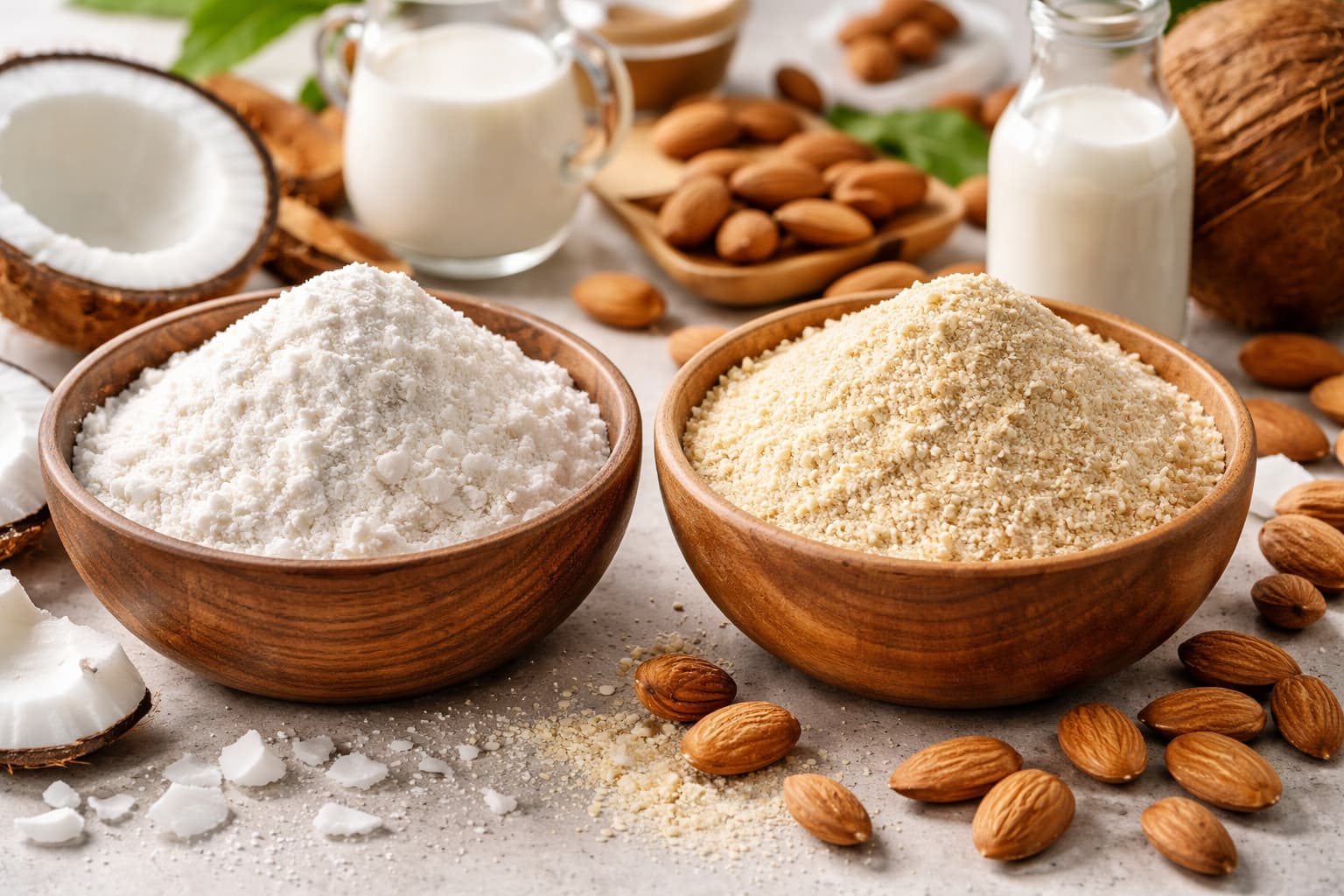
Choosing the right flour alternative can significantly affect the outcome of gluten-free baking. Coconut flour and almond flour are two of the most widely used grain-free options. Both flours appear frequently in keto, paleo, and gluten-free recipes. However, they behave very differently in baking. Many recipes fail because these flours are treated as interchangeable substitutes. In practice, they differ in absorbency, texture, nutritional profile, and recipe requirements. This guide explains how coconut flour and almond flour work, how they differ, and when each option performs best in baking.
What is Coconut Flour?
Coconut flour is a grain-free flour made from dried coconut meat. It is commonly used in gluten-free and low-carb baking. The flour is produced after coconut milk extraction. The remaining coconut solids are dried and ground into a fine powder. Because much of the oil is removed during processing, coconut flour contains a high amount of fiber and absorbs significant amounts of liquid.
Key Characteristics of Coconut Flour
Coconut flour has several distinctive properties:
- very high fiber content
- mild natural sweetness
- extremely high liquid absorbency
- low fat compared to nut-based flours
These characteristics strongly influence how coconut flour behaves in recipes.
How Coconut Flour is Made
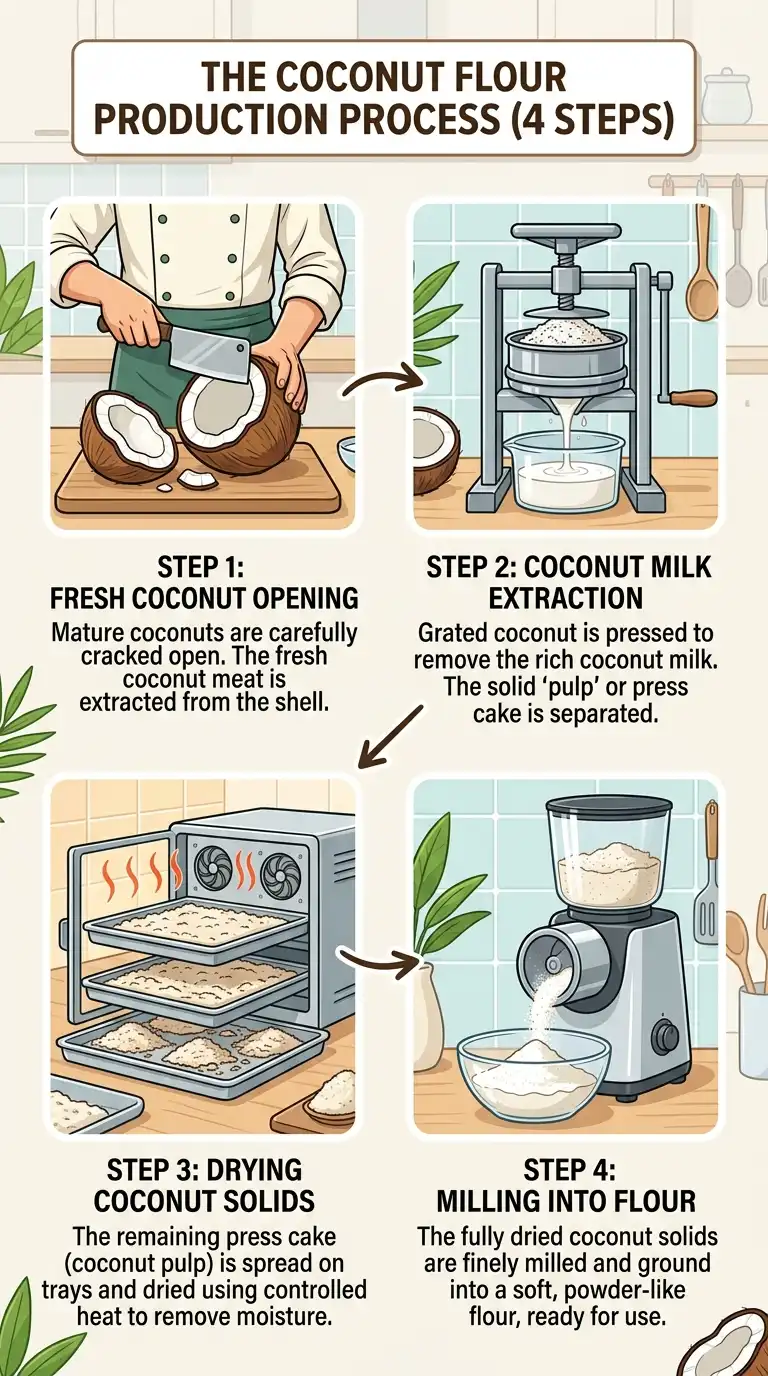
The production process typically involves several steps:
- Fresh coconut meat is pressed to extract coconut milk.
- The remaining coconut solids are dried.
- The dried coconut is finely milled into flour.
This process removes most of the moisture and oil. The result is a light, powdery flour with very high fiber density.
Because the fiber content is so high, coconut flour absorbs large amounts of liquid during baking.
Taste, Texture, and Aroma
Coconut flour has a mild coconut aroma and slight natural sweetness. The flavor is usually subtle when combined with other ingredients. However, it can be noticeable in delicate baked goods. Texture is another defining characteristic. Coconut flour is very fine but tends to produce dense baked goods when recipes lack sufficient moisture.
Common Uses in Baking
Coconut flour appears most often in recipes designed specifically for grain-free baking. Because of its absorbency, recipes typically require additional eggs or liquids.
Common coconut flour recipes include:
- pancakes and waffles
- muffins and quick breads
- low-carb bread
- cookies and brownies
- keto baked goods
A key takeaway is that coconut flour rarely works as a direct substitute for wheat flour.
What is Almond Flour?
Almond flour is a grain-free flour made from finely ground almonds. It is one of the most common alternatives used in gluten-free baking. Because almonds naturally contain oil, almond flour produces baked goods with a moist and tender texture. The flour also provides protein, healthy fats, and several micronutrients including vitamin E and magnesium.
How Almond Flour is Made
Almond flour is produced by grinding almonds into a fine powder. However, two main types exist.
Blanched Almond Flour
Blanched almond flour is made from almonds with their skins removed. The almonds are briefly boiled, peeled, dried, and ground into flour. This creates a light-colored flour with a fine texture. Most baking recipes prefer blanched almond flour.
Unblanched Almond Flour (Almond Meal)
Unblanched almond flour includes the almond skins. The skins create a slightly darker color and a coarser texture. This version is often labeled almond meal.
Taste, Texture, and Aroma
Almond flour has a mild nutty flavor. The taste pairs well with ingredients such as chocolate, vanilla, and spices. This makes it especially suitable for desserts. The texture is soft but slightly moist due to the natural oils found in almonds. As a result, almond flour typically produces tender baked goods.
Common Uses in Baking
Almond flour is considered one of the most versatile grain-free baking ingredients. Common uses include:
- cakes and cupcakes
- cookies and brownies
- pancakes and waffles
- pie crusts and tart shells
- breading for meat or vegetables
Many gluten-free recipes rely on almond flour because it produces textures similar to traditional baked goods.
Coconut Flour vs Almond Flour: Nutrition Comparison
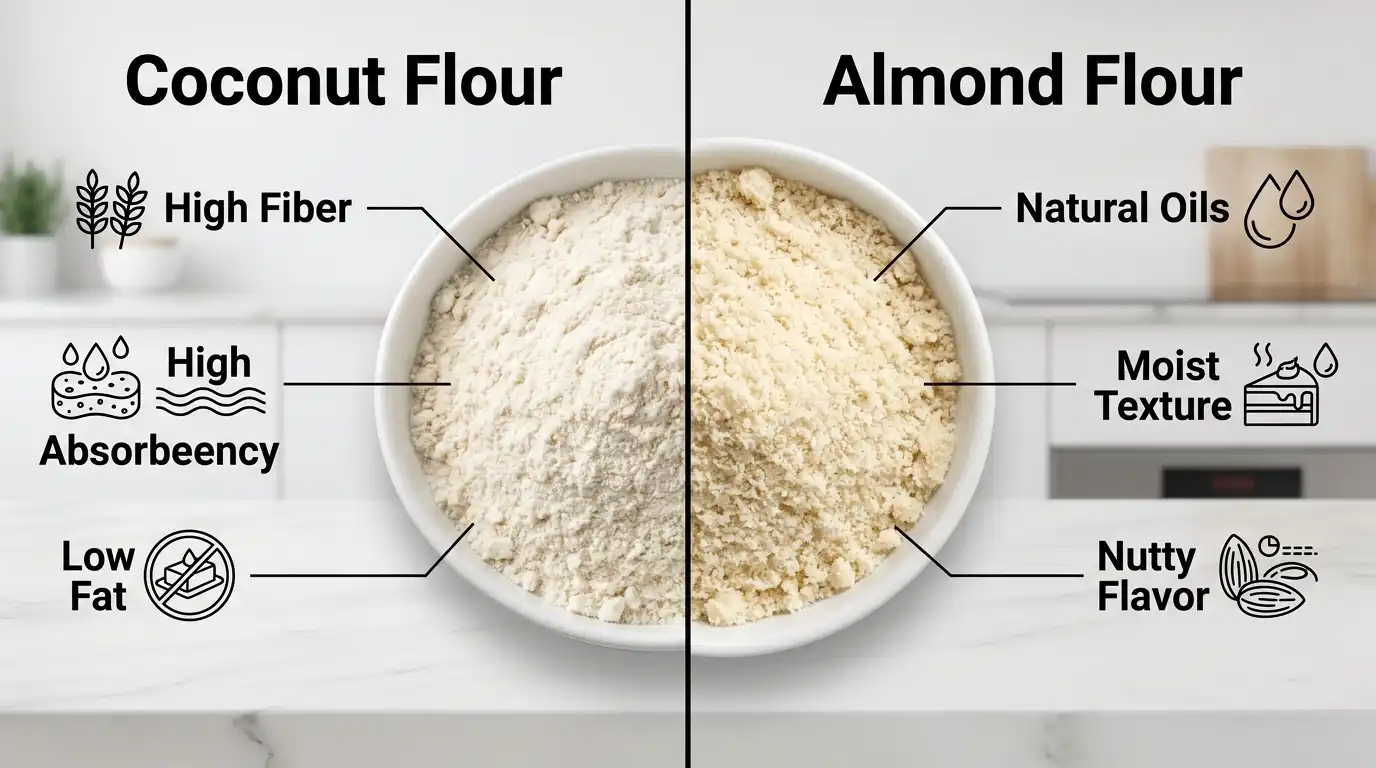
Both flours are often chosen for their nutritional advantages over wheat flour. However, their nutritional composition differs significantly. Coconut flour is particularly high in fiber. Almond flour contains more fat and slightly more protein.
At-a-Glance Nutrition Table
Average values per 100 grams.
| Nutrient | Coconut Flour | Almond Flour |
| Calories | ~400 kcal | ~575 kcal |
| Protein | ~18 g | ~21 g |
| Fat | ~14 g | ~50 g |
| Carbohydrates | ~60 g | ~22 g |
| Fiber | ~35 g | ~10 g |
| Net Carbs | ~25 g | ~12 g |
Key Insight
Coconut flour provides more fiber. Almond flour provides more fat and fewer net carbohydrates.
Which Diets Use Coconut Flour vs Almond Flour?
Both flours appear in specialized diets because they are naturally grain-free and gluten-free.
Keto Diet
Almond flour is typically preferred in keto recipes. It contains fewer net carbohydrates and more fat. Coconut flour can still be used but requires careful recipe adjustments.
Paleo Diet
Both coconut flour and almond flour are considered paleo-friendly. Neither flour contains grains or refined additives.
Gluten-Free Diet
Both flours are naturally gluten-free and commonly replace wheat flour in gluten-free recipes.
High-Fiber Diets
Coconut flour is particularly attractive for high-fiber diets. Its fiber content is significantly higher than most alternative flours.
Baking Differences: Coconut Flour vs Almond Flour
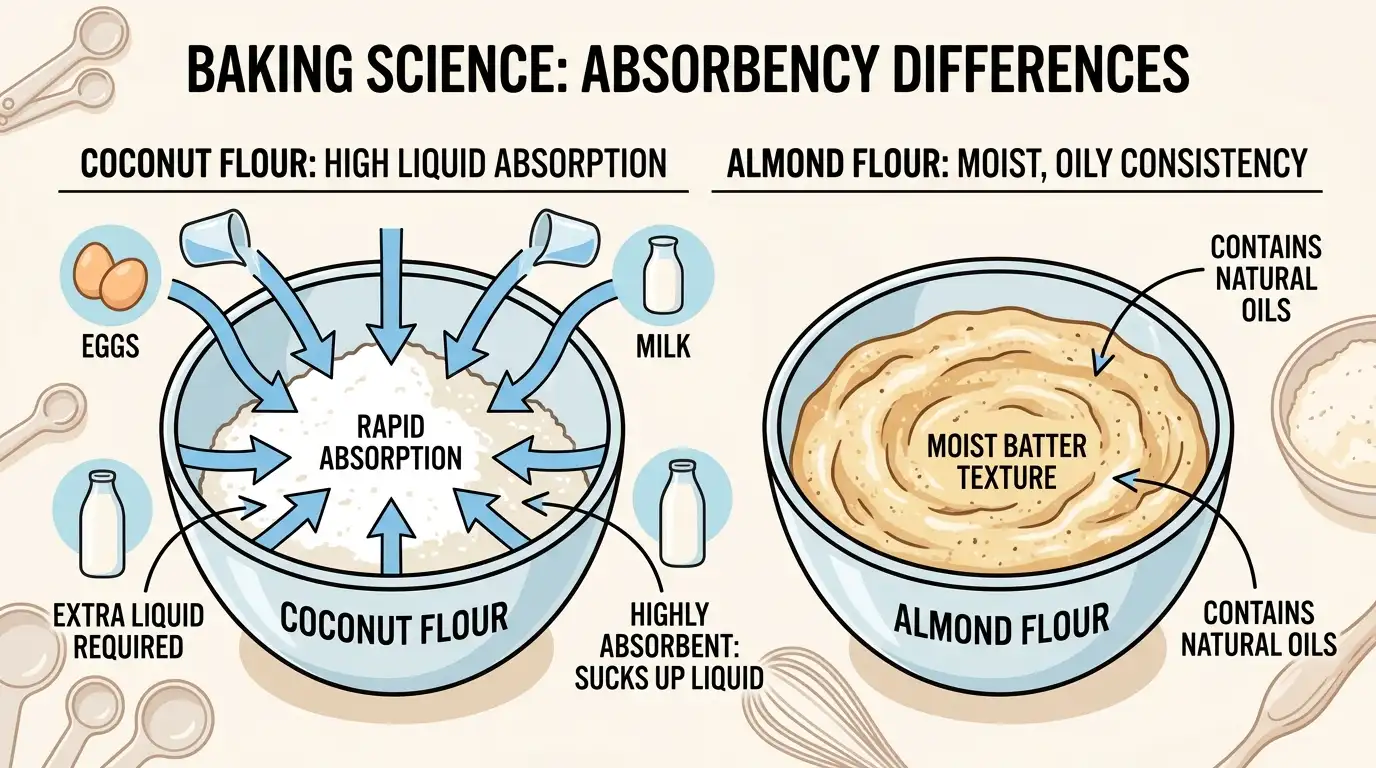
The most important differences between these flours appear during baking. They differ in absorbency, fat content, and structure. These differences explain why recipes often fail when the flours are substituted incorrectly.
Absorbency and Moisture Requirements
Coconut flour absorbs large amounts of liquid. A recipe using coconut flour typically requires more eggs, milk, or other liquid ingredients. Without sufficient moisture, baked goods become dry and crumbly. Almond flour behaves differently. Because it contains natural oils, it produces moist baked goods with fewer liquid adjustments.
Why Substituting the Flours Rarely Works
A common misconception is that coconut flour and almond flour can be swapped in equal amounts. In reality, coconut flour is far more absorbent. In many recipes, ¼ cup coconut flour replaces roughly 1 cup almond flour. However, additional liquid and eggs must also be added. For consistent results, recipes should be designed specifically for the flour being used.
Best Recipes for Each Flour
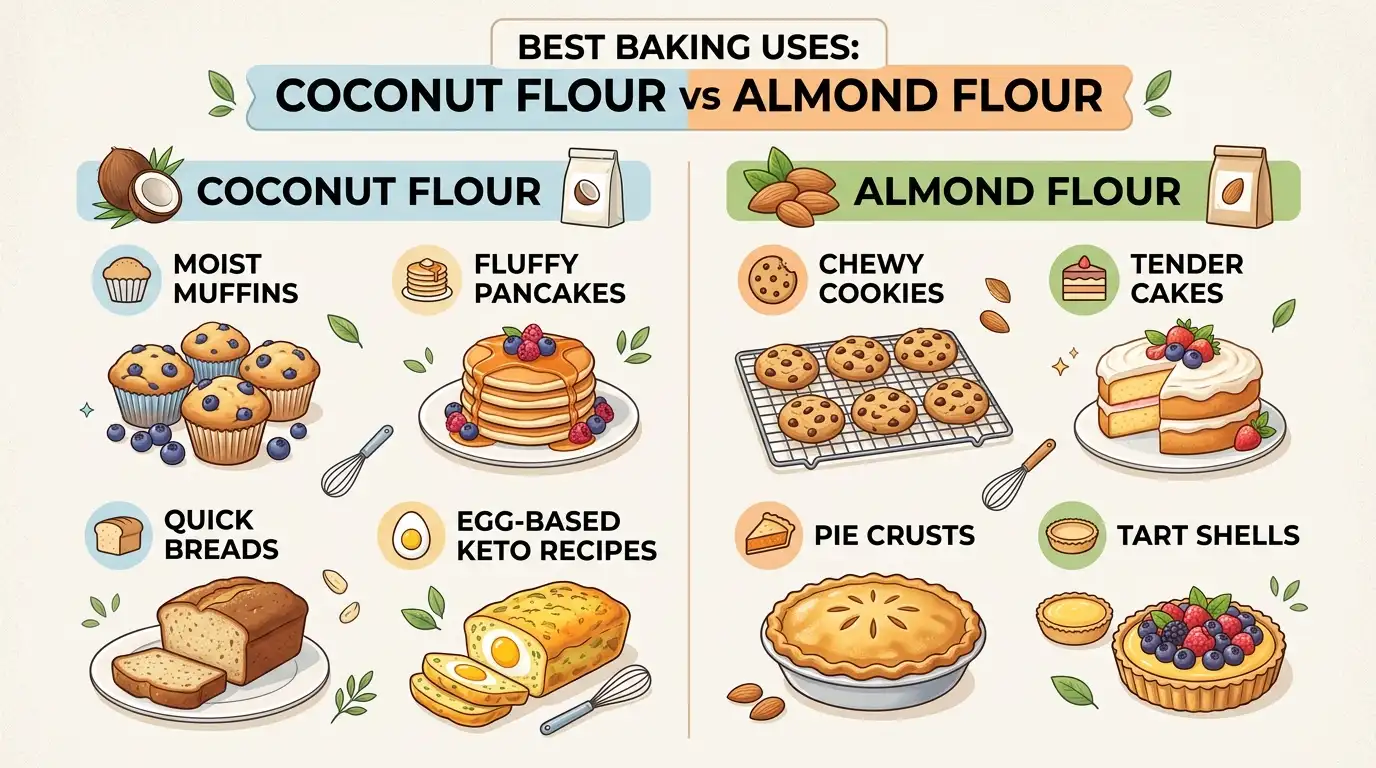
Different baked goods benefit from different flour properties.
Coconut Flour Works Best For
- muffins
- quick breads
- pancakes
- egg-based keto baking
Almond Flour Works Best For
- cookies
- cakes
- pie crusts
- savory bread recipes
Almond flour tends to produce softer textures due to its fat content.
Taste and Texture in Baked Goods
Flavor and texture differences also influence which flour works best in specific recipes. Coconut flour produces lighter flavor but denser textures. Almond flour produces richer flavor and softer textures.
Flavor Differences
Coconut flour provides mild sweetness and subtle coconut flavor. Almond flour provides a nutty flavor that complements desserts particularly well.
Texture Differences
Almond flour generally produces moist and tender baked goods. Coconut flour often creates denser textures unless recipes contain enough eggs and liquid. Many grain-free recipes combine both flours to balance texture and structure.
Allergies and Dietary Considerations
Dietary restrictions can influence which flour is appropriate.
Nut-Free vs Nut-Based Ingredients
Coconut flour is generally considered safe for most people with tree-nut allergies. Botanically, coconuts are classified as fruit rather than tree nuts. Almond flour, however, is derived from almonds and is not suitable for individuals with nut allergies.
Egg Requirements in Coconut Flour Recipes
Coconut flour recipes often require more eggs. Eggs provide structure and moisture that coconut flour lacks. This can create challenges for vegan baking because many coconut flour recipes rely heavily on eggs. Almond flour typically requires fewer eggs due to its natural fat content.
Cost and Availability
Cost and accessibility may also affect flour selection. Almond flour is generally more expensive than coconut flour. Almond production requires larger quantities of raw nuts. Coconut flour is often more affordable because it is produced from coconut byproducts. Another factor is usage quantity. Coconut flour recipes typically require smaller amounts due to high absorbency.
Where These Flours Are Sold
Both flours are widely available in:
- supermarkets
- health food stores
- gluten-free specialty stores
- online retailers
Most grocery stores now carry both options in the baking aisle.
Conclusion
Coconut flour and almond flour are two of the most widely used grain-free baking ingredients. Each flour offers different benefits. Coconut flour provides high fiber and a nut-free alternative. However, it requires careful moisture balancing in recipes.
Almond flour provides healthy fats and produces moist, tender baked goods. It is often easier to work with in many baking applications. Understanding the structural and nutritional differences between these flours helps improve baking results. Selecting the right flour depends on the recipe, dietary goals, and desired texture.
Frequently asked questions
Source link