“How many carbs per day?” is one of those questions that sounds simple until you try to answer it. The Dietary Guidelines say 225-325g. The keto community says 20-50g. Your friend who does CrossFit says something completely different. And the actual right answer depends on what you’re trying to accomplish.
After six cookbooks and thousands of reader questions on this exact topic, I can tell you that the number itself matters less than understanding why different ranges exist and which one fits your specific goal. Someone trying to get into ketosis and someone trying to maintain their weight after losing 40 pounds need very different carb targets, and treating those situations the same is where most people get confused.
This article breaks down the research behind each carb range, from the ketogenic threshold all the way up to the standard dietary recommendation, so you can figure out where you should land based on your goals, your activity level, and how your body actually responds.
Jump to a section:
How Many Carbs Per Day? The Quick Comparison
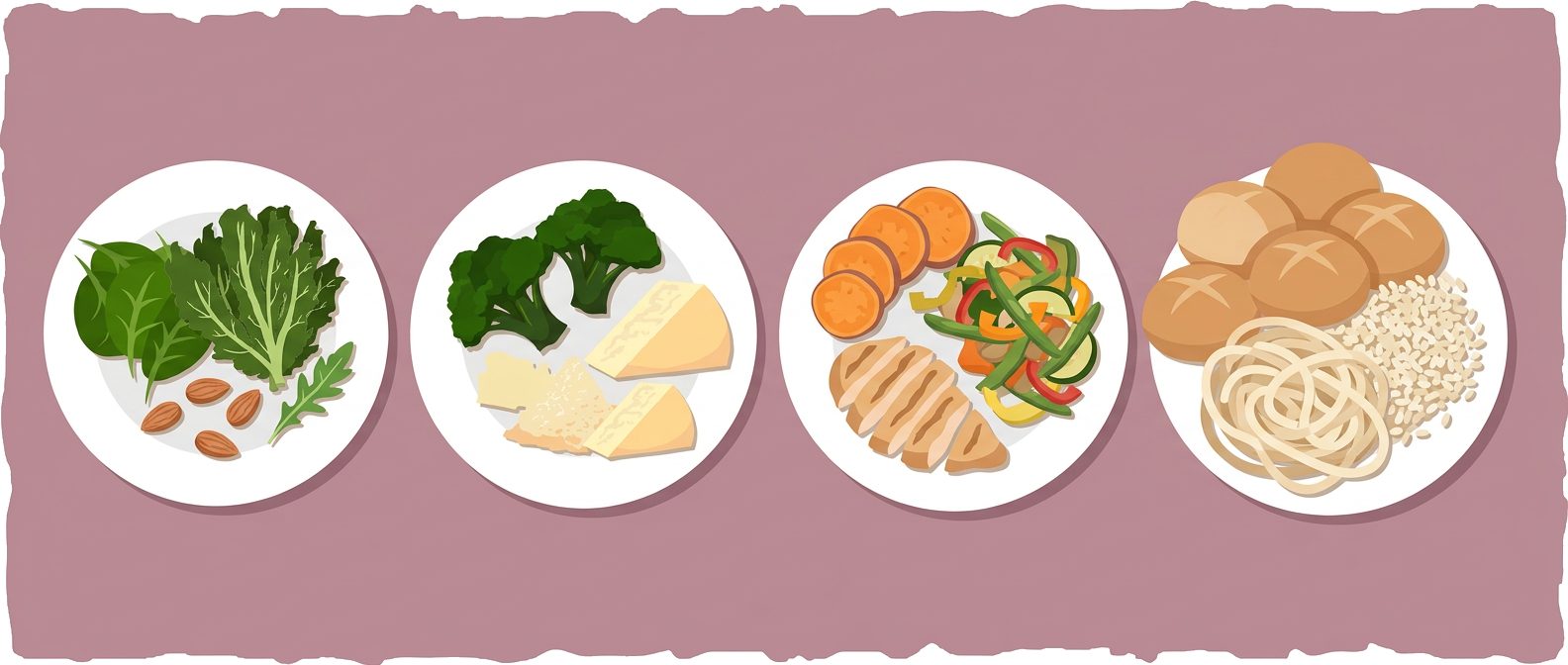
Before getting into the weeds, here’s the overview. The table below shows the major carb intake ranges, what they’re typically used for, and whether they’ll put you in ketosis.
| Category | Daily Carbs (grams) | % of 2,000 kcal | Ketosis? | Best For |
|---|---|---|---|---|
| Ketogenic | 20-50g | <10% | Yes | Fat loss, blood sugar control, therapeutic ketosis |
| Low-carb | 50-130g | 10-25% | Unlikely | Weight loss without strict ketosis, moderate carb reduction |
| Moderate | 130-225g | 26-44% | No | Maintenance, active lifestyles, gradual weight management |
| Standard (AMDR) | 225-325g | 45-65% | No | Government recommendation for general population |
These categories come from a 2024 expert consensus panel led by Jeff Volek and published in Frontiers in Nutrition, which established standardized definitions for carbohydrate intake levels based on a 2,000-calorie diet.A 2024 expert consensus in Frontiers in Nutrition established standardized carbohydrate intake definitions: very-low-carb ketogenic (<10%, 20-50g/day), low-carb (10-25%, 50-129g/day), moderate-carb (26-44%, 130-224g/day), and high-carb (45-64%, 225-324g/day). The numbers shift if you eat more or fewer total calories, but these ranges give you a solid reference point.
The Institute of Medicine set the Acceptable Macronutrient Distribution Range (AMDR) for carbohydrates at 45-65% of total calories – that’s the 225-325g range most nutritionists default to.Per the AMDR description in the DRI reports, adults should consume 45-65% of total energy from carbohydrates, with an RDA of 130g/day based on the brain’s glucose requirements. They also set a minimum RDA of 130g per day, based on the brain’s estimated glucose needs. But here’s the thing – your brain can run on ketones too, which is exactly why ketogenic diets work at 20-50g.
Carb Ranges Explained: From Keto to Standard
Ketogenic range (20-50g/day): This is where your body shifts from burning primarily glucose to burning fat and producing ketones. Nutritional ketosis kicks in when blood beta-hydroxybutyrate (BHB) reaches at least 0.5 mmol/L, and most people need to stay under 50g of total carbs to get there.A 2021 review in Obesity Science & Practice defined nutritional ketosis as blood BHB of at least 0.5 mmol/L, noting that healthy individuals on a standard diet maintain ketone levels around 0.1 mmol/L – roughly a fivefold increase is needed to reach the ketosis threshold. I recommend 20-30g of net carbs for anyone doing keto. That gives you enough room for plenty of vegetables and some berries without worrying about whether you’re close to the edge.
Low-carb range (50-130g/day): You’re significantly reducing carbs compared to the standard diet, but you’re not in ketosis. This range can still support weight loss through reduced insulin levels and lower calorie intake, but you don’t get the appetite-suppressing benefits of ketones. It’s a good middle ground for people who find keto too restrictive but want to cut back meaningfully.
Moderate range (130-225g/day): The bottom of this range aligns with the IOM’s minimum RDA. You’re eating fewer carbs than the average American (who typically consumes 250g+ per day), but enough to fully fuel glycolytic exercise. This works for active people in maintenance mode who’ve already hit their body composition goals.
Standard range (225-325g/day): The government recommendation. For a 2,000-calorie diet, this works out to about 56-81g per meal across three meals. Most of the population eats somewhere in this range, and it’s what conventional nutrition advice is built around. International recommendations are similar – the WHO suggests 55-75% of energy from carbs, EFSA recommends 45-60%, and the Nordic countries land at 45-60%.A 2018 review in the European Journal of Clinical Nutrition compared international dietary carbohydrate recommendations across WHO, US/Canada, Australia, EU, UK, and Nordic countries, finding most recommend 45-65% of energy from carbohydrates.
Carbs for Weight Loss: What the Research Actually Shows
This is where most people want to start, so let’s look at what the data says about cutting carbs for fat loss.
A 2022 meta-analysis of 25 randomized controlled trials (2,442 total participants) found that low-carb dieters lost an additional 2.6 kg compared to those on standard diets at the 6-8 month mark.Silverii et al. (2022) in Diabetes, Obesity & Metabolism analyzed 25 RCTs with 2,442 participants and found low-carbohydrate dieters lost an additional 2.59 kg at 3-4 months and 2.64 kg at 6-8 months compared to non-carb-restricted diets. A separate meta-analysis of 33 RCTs (3,939 participants) that same year found low-carb eaters lost 1.33 kg more than low-fat dieters, with better triglyceride and HDL cholesterol numbers to boot.A 2022 meta-analysis of 33 RCTs in Frontiers in Nutrition (3,939 participants) found low-carb diets produced 1.33 kg greater weight loss, 0.14 mmol/L greater triglyceride reduction, and 0.07 mmol/L greater HDL increase compared to low-fat diets at 6-23 months.
Here’s the catch, though: the advantage fades with time. Both meta-analyses found that by 18-24 months, the weight loss difference between low-carb and other approaches essentially disappeared. That’s not because low-carb stops working. It’s because adherence drops off. People gradually eat more carbs, the metabolic benefits soften, and the gap closes.
A 2021 review in Nutrients put it plainly: low-carb diets produce short-term metabolic benefits including reduced plasma insulin, enhanced lipolysis, and suppressed appetite, but these effects diminish beyond 6 months as adherence declines.Barber et al. (2021) in Nutrients found that LCD short-term benefits include HbA1c reduction of 0.44% and triglyceride reduction of 0.33 mmol/L, but weight loss advantages over other diets diminish or disappear after 12 months due to adherence challenges.
Very low-carb diets (under 50g, the ketogenic range) have an additional edge for appetite control. One controlled study found that severely obese participants on a very-low-carb ketogenic diet reported hunger levels similar to participants eating roughly 1,000 more calories on a low-fat diet.Per a 2018 review in Current Nutrition Reports, severely obese participants on a very-low-carb ketogenic diet reported hunger levels comparable to participants consuming approximately 1,000 kcal more on a low-fat diet, alongside improvements in lipids, HbA1c, CRP, and fasting insulin. That appetite suppression is a huge practical advantage because it makes the calorie deficit feel manageable instead of miserable.
My take: the research supports going lower rather than higher if weight loss is your primary goal, especially in the first 6 months. And if you can maintain the carb restriction long-term (which I’ve done for over a decade at this point), the benefits don’t disappear.
Carbs for Keto: Why I Recommend 20-30g
If you’ve spent any time on this site, you know I recommend 20-30g of net carbs per day for keto. The broader literature usually cites “under 50g,” and that’s technically the ceiling for most people to reach ketosis. But I’ve found that 20-30g gives you a comfortable buffer.
Here’s why. The threshold for nutritional ketosis isn’t a hard line at exactly 50g – it varies from person to person based on insulin sensitivity, activity level, and metabolic history. Starting at 20-30g puts almost everyone solidly into ketosis without guesswork. From there, you can test your limits if you want to (more on that later), but you’ve established a reliable baseline first.

What does 20-30g of net carbs actually look like in a day? More food than most people expect:
- 2 cups of mixed greens (about 1g net carbs)
- 1 cup of broccoli (about 3.6g net carbs)
- Half an avocado (about 2g net carbs)
- 1 oz of almonds (about 2.5g net carbs)
- Half a cup of raspberries (about 3.3g net carbs)
- Various seasonings, sauces, and incidentals (3-5g net carbs)
That’s roughly 16-17g of net carbs, and you’ve eaten a decent amount of vegetables, fruit, and nuts. You still have room. The point is that 20-30g doesn’t mean you’re eating nothing but meat and cheese (though you can if you want to). It means you’re choosing your carbs carefully and getting them from whole, nutrient-rich sources.
The keto calculator can help you dial in your exact macros based on your stats and goals, but 20-30g net carbs is the starting point I recommend for everyone.
I made the mistake early on of trying to hover right around 50g because the research said that was fine. I kept drifting in and out of ketosis, my energy was inconsistent, and I was constantly second-guessing whether I was “in” or “out.” Dropping to the 20-30g range eliminated that uncertainty completely. The consistency made everything else easier – energy, hunger, meal planning, all of it.
How Activity Level Changes Your Number

Your carb needs scale with how much and how intensely you move. A desk worker and a competitive CrossFit athlete have fundamentally different fuel requirements, and pretending otherwise leads to either unnecessary restriction or insufficient fueling.
Sedentary to lightly active: If your day involves mostly sitting with some walking and maybe a few gym sessions per week, you don’t need extra carbs beyond whatever range fits your goal. Keto at 20-30g works perfectly here. Your energy demands are low enough that fat and ketones cover everything comfortably.
Moderately active (regular exercise, 3-5 days/week): Most people doing standard resistance training, jogging, cycling, or recreational sports can stay keto without performance issues. Your muscles can run on fat for moderate-intensity work, and your liver produces enough glucose through gluconeogenesis to cover the small amount of glycolytic demand. This is where most of my readers land, and 20-30g net carbs works well.
High-intensity or endurance athletes: This is where it gets more nuanced. Traditional sports nutrition recommends 5-10g of carbs per kilogram of body weight per day for athletes – that’s 350-700g for a 70 kg person.The 2019 Physiological Overview and Practical Recommendations in Nutrients recommends 5-7 g/kg/day for general training and 7-10 g/kg/day for endurance athletes, with competition-day loading at 10-12 g/kg in the 36-48 hours before an event. Those numbers assume a carb-dependent metabolism. Fat-adapted athletes running on ketones need far less.
A 2025 systematic review of 19 studies on low-carb diets and athletic performance found mixed results: strength performance was maintained or improved in several studies, but aerobic and anaerobic performance didn’t consistently benefit.Sultan & Speelman (2025) in Cureus reviewed 19 studies and found low-carb diets may maintain or improve upper and lower body strength, but provide no consistent benefit – and may impair – some measures of aerobic and anaerobic performance. The practical takeaway: if you’re doing strength training or moderate cardio, keto works fine. If you’re doing high-intensity intervals or competitive endurance events, you might benefit from strategic carb intake around workouts using something like the targeted ketogenic diet (TKD).
For most people reading this, though, the activity adjustment is smaller than you think. Unless you’re training at a competitive level, your standard keto carb range handles everything you need.
Net Carbs vs. Total Carbs: A Quick Breakdown
When I say “20-30g of carbs on keto,” I’m talking about net carbs. The distinction matters, and if you’re new to this, it’s worth understanding.
Net carbs = total carbs – fiber – certain sugar alcohols
Fiber is a carbohydrate by chemical classification, but your body can’t digest it. It passes through without raising blood sugar or interrupting ketosis. That’s why you subtract it. Sugar alcohols like erythritol are partially or fully unabsorbed, so they get a partial or full subtraction depending on the type.The StatPearls clinical reference on Low-Carbohydrate Diets defines net carbohydrate as total non-fiber saccharides digestible in humans, determined by subtracting non-digestible carbohydrate from total carbohydrate to capture the overall glycemic load of the diet.
This is why a cup of cauliflower with 5g total carbs and 2g fiber only counts as 3g net carbs toward your daily limit. It also means you can eat a meaningful volume of vegetables without blowing your budget.
Nutrition labels in the US list total carbs with fiber as a sub-line. In Europe and many other countries, the label already shows net carbs (they subtract fiber before printing the number). If you’re buying imported products, check which system the label uses.
For the full breakdown on counting net carbs, including which sugar alcohols to subtract and which to count, read our detailed guide on net carbs vs. total carbs.
How to Find Your Personal Carb Threshold
The ranges above are population averages. Your individual carb tolerance depends on several factors that make your number slightly different from someone else’s.
Insulin sensitivity is the biggest variable. Research shows that people with lower fasting insulin levels tend to produce more ketones at any given carb intake, while those with higher baseline insulin – often tied to higher BMI and metabolic syndrome – need stricter carb restriction to achieve the same ketone levels.A 2023 review in Nutrients found that ketogenic diet effects on insulin sensitivity involve both direct effects from ketosis and indirect effects from weight loss, with some studies showing insulin sensitivity improvements even without weight loss, and noted that baseline insulin levels predict ketosis response. A 2020 review in BMJ Nutrition, Prevention & Health found that specific genetic variants, including LIPF and GYS2, are associated with differential weight loss responses on ketogenic diets, and palmitoleic acid levels serve as a marker of individual carbohydrate intolerance.Genetic variants for personalised management of very low carbohydrate ketogenic diets (BMJ Nutrition, Prevention & Health, 2020) identified SNPs in LIPF, GYS2, and CETP associated with differential weight loss on ketogenic diets, and palmitoleic acid as a uniform marker of carbohydrate intolerance independent of sex or weight loss.
You don’t need a genetic test to find your threshold, though. Here’s the practical approach:
Step 1: Start at 20g net carbs. Stay here for 2-3 weeks. This puts almost everyone in ketosis and gives you a clean baseline. Use a blood ketone meter if you want confirmation – you’re looking for BHB of 0.5 mmol/L or higher.

Step 2: Add 5g per week. Increase to 25g for a week, then 30g, and so on. Monitor how you feel, track your ketone levels if you’re testing, and watch for changes in hunger, energy, and mental clarity.
Step 3: Note where things shift. When you start noticing increased hunger, energy dips, or your ketones consistently drop below 0.5 mmol/L, you’ve found your ceiling. Back off 5-10g, and that’s your maintenance number.
Most people on keto land somewhere between 20-40g net carbs. Active people with good insulin sensitivity sometimes stay in ketosis at 50g or higher. People with significant insulin resistance may need to stay at 20g or below, at least initially. As your metabolic health improves over months of low-carb eating, your threshold often increases.
The keto food list helps you build meals that fit whatever carb level you’re targeting, and the how to start keto guide walks through the full setup process if you’re just beginning.
Carb Quality Matters as Much as Quantity
One thing the research is clear on: not all carbs are equal, regardless of what range you’re eating in.
A landmark 2019 Lancet meta-analysis covering 135 million person-years of data found that people who ate the most dietary fiber had a 15-30% lower risk of all-cause mortality, cardiovascular death, coronary heart disease, stroke, type 2 diabetes, and colorectal cancer compared to those who ate the least.Reynolds et al. (2019) in The Lancet analyzed 185 prospective studies and 58 clinical trials covering 135 million person-years and found 15-30% decreases in all-cause and cardiovascular mortality for highest vs. lowest fiber consumers, with optimal daily intake between 25-29g. The sweet spot for fiber was 25-29g per day.
On keto, your carbs should be coming from vegetables, nuts, seeds, and small amounts of berries – foods that bring fiber, micronutrients, and polyphenols along with their carb count. Spending 20g of your daily allowance on a tablespoon of sugar versus spending it on 3 cups of broccoli and half an avocado gives you wildly different nutritional outcomes even though the carb count is the same.
The StatPearls clinical reference makes this point well: food quality matters, not just macronutrient levels. Healthy low-carb diets (those emphasizing whole foods, vegetables, and healthy fats) are associated with lower mortality, while unhealthy low-carb diets (those relying on processed meats and refined fats) are associated with higher mortality.
If you’re doing keto or low-carb for health rather than just weight, prioritize getting your carbs from whole food sources. A keto food list makes this simple – stick to the green vegetables, above-ground produce, nuts, and seeds that give you the most nutritional value per net carb.
Key Takeaways
- Your ideal daily carb intake depends on your goal: 20-50g for ketosis, 50-130g for general low-carb, 130-225g for moderate/maintenance, and 225-325g per the standard dietary guidelines.
- For keto, 20-30g of net carbs per day is the sweet spot – it reliably produces ketosis without requiring you to test constantly or worry about drifting out.
- Low-carb diets produce greater short-term weight loss than other approaches (about 2.6 kg more at 6-8 months), but the advantage fades by 18-24 months as adherence drops – the diet that works is the one you stick with.
- Activity level matters less than most people think. Unless you’re training at a competitive level, standard keto carb ranges support most exercise without issues.
- Individual carb tolerance varies based on insulin sensitivity, genetics, activity level, and metabolic history – start at 20g net carbs and gradually increase to find your personal ceiling.
- Carb quality matters as much as quantity. Getting your carbs from vegetables, nuts, seeds, and berries rather than processed sources changes the health equation significantly.
FAQ
How many carbs should I eat per day to lose weight?
Most research points to under 130g per day as the threshold where low-carb weight loss benefits kick in, with greater short-term fat loss occurring under 50g per day (the ketogenic range). A 2022 meta-analysis of 25 RCTs found that low-carb dieters lost an additional 2.6 kg compared to standard diets in the first 6-8 months. That said, the best number for you depends on your activity level, insulin sensitivity, and what you can stick to long-term. If you’re new to carb restriction, starting at 20-30g of net carbs and adjusting upward from there gives you a clear baseline.
Is 100 carbs a day considered low carb?
By clinical standards, yes. The StatPearls clinical reference defines low-carb as anything under 130g per day (or less than 26% of total calories). At 100g, you’re well within that range, but you won’t be in ketosis. Most people need to stay under 50g to reach nutritional ketosis. A 100g range works well for weight maintenance or for active people who’ve already hit their goals and want a more flexible approach without going back to the standard 225-325g range. Check the keto calculator to see how different carb levels affect your macros.
What happens if I eat too few carbs?
When you drop below 50g per day, your body shifts to burning fat and producing ketones for fuel. This transition can cause temporary side effects in the first week or two – fatigue, headaches, irritability, and brain fog (commonly called the keto flu). These symptoms are usually electrolyte-related and resolve with proper sodium, potassium, and magnesium intake. Once you’re fat-adapted (typically 2-4 weeks in), most people report stable energy and reduced hunger. There’s no evidence that staying at 20-30g of net carbs long-term causes harm in healthy adults, though you’ll want to make sure you’re getting enough fiber from low-carb vegetables.
Do active people need more carbs than sedentary people?
It depends on the type of activity. Endurance and high-intensity athletes have traditionally been advised to consume 5-10g of carbs per kilogram of body weight per day, which for a 70kg person works out to 350-700g. But fat-adapted athletes can perform well at much lower levels for steady-state exercise. A 2025 systematic review found that low-carb diets may preserve or improve strength but don’t consistently benefit aerobic or anaerobic performance. If you’re doing moderate exercise like walking, light resistance training, or yoga, you can stay comfortably at 20-30g net carbs. High-intensity or endurance training may benefit from targeted carbs around workouts, using approaches like the targeted ketogenic diet.
Should I count net carbs or total carbs?
For keto purposes, net carbs (total carbs minus fiber and certain sugar alcohols) are what matter. Fiber doesn’t raise blood sugar or interrupt ketosis because your body can’t digest it. When I say 20-30g on keto, I mean net carbs. So a cup of broccoli with 6g total carbs and 2.4g fiber counts as roughly 3.6g net carbs. That distinction is important because it means you can eat a solid amount of vegetables and stay within your limit. For a deeper breakdown, read our full guide on net carbs vs. total carbs.
Sources
- Volek JS, Yancy WS Jr, Gower BA, Phinney SD, et al. Expert consensus on nutrition and lower-carbohydrate diets: An evidence- and equity-based approach to dietary guidance. Frontiers in Nutrition. 2024. PMC10937533
- National Academies of Sciences. Description of the Acceptable Macronutrient Distribution Range. Rethinking the AMDR for the 21st Century. NBK610333
- Churuangsuk C, Lean MEJ, Combet E. Dietary carbohydrates: a review of international recommendations and the methods used to derive them. European Journal of Clinical Nutrition. 2018;72(12):1625-1643. PMC6281563
- Dansinger M, Augustin S, Johnson L. Measuring ketone bodies for the monitoring of pathologic and therapeutic ketosis. Obesity Science & Practice. 2021. PMC8488448
- Silverii GA, Botarelli L, Dicembrini I, et al. Effectiveness of low-carbohydrate diets for long-term weight loss in obese individuals: A meta-analysis of randomized controlled trials. Diabetes, Obesity & Metabolism. 2022. PMC9546386
- Choi YJ, Jeon SM, Shin S. Effects of low-carbohydrate diets versus low-fat diets on metabolic risk factors in overweight and obese adults: A meta-analysis of randomized controlled trials. Frontiers in Nutrition. 2022. PMC9397119
- Barber TM, Hanson P, Kabisch S, Pfeiffer AFH, Weickert MO. The low-carbohydrate diet: short-term metabolic efficacy versus longer-term limitations. Nutrients. 2021;13(4):1187. PMC8066770
- Gershuni VM, Yan SL, Medici V. Nutritional ketosis for weight management and reversal of metabolic syndrome. Current Nutrition Reports. 2018;7(3):97-106. PMC6472268
- Reynolds A, Mann J, Cummings J, Winter N, Mete E, Te Morenga L. Carbohydrate quality and human health: a series of systematic reviews and meta-analyses. The Lancet. 2019;393(10170):434-445. PMID 30638909
- Sultan ZH, Speelman D. A systematic review of the effects of low-carbohydrate diet on athletic physical performance parameters. Cureus. 2025;17(2). PMC11922096
- Cuevas-Sierra A, Ramos-Lopez O, Riezu-Boj JI, Milagro FI, Martinez JA. Genetic variants for personalised management of very low carbohydrate ketogenic diets. BMJ Nutrition, Prevention & Health. 2020. PMC7841814
- Capra S, Hannan-Jones M, Desbrow B. Carbohydrate availability and physical performance: physiological overview and practical recommendations. Nutrients. 2019;11(5):1084. PMC6566225
- Masood W, Annamaraju P, Khan Suheb MZ, Uppaluri KR. Low-Carbohydrate Diet. StatPearls. 2024. NBK537084
- Stefanaki C, Pervanidou P, Boschiero D, Chrousos GP. The effects of ketogenic diet on insulin sensitivity and weight loss. Nutrients. 2023;15(14):3212. PMC10385501
The information in this article is not medical advice and is not a substitute for professional medical guidance. Always consult a qualified healthcare provider before making changes to your diet or health regimen.
Source link