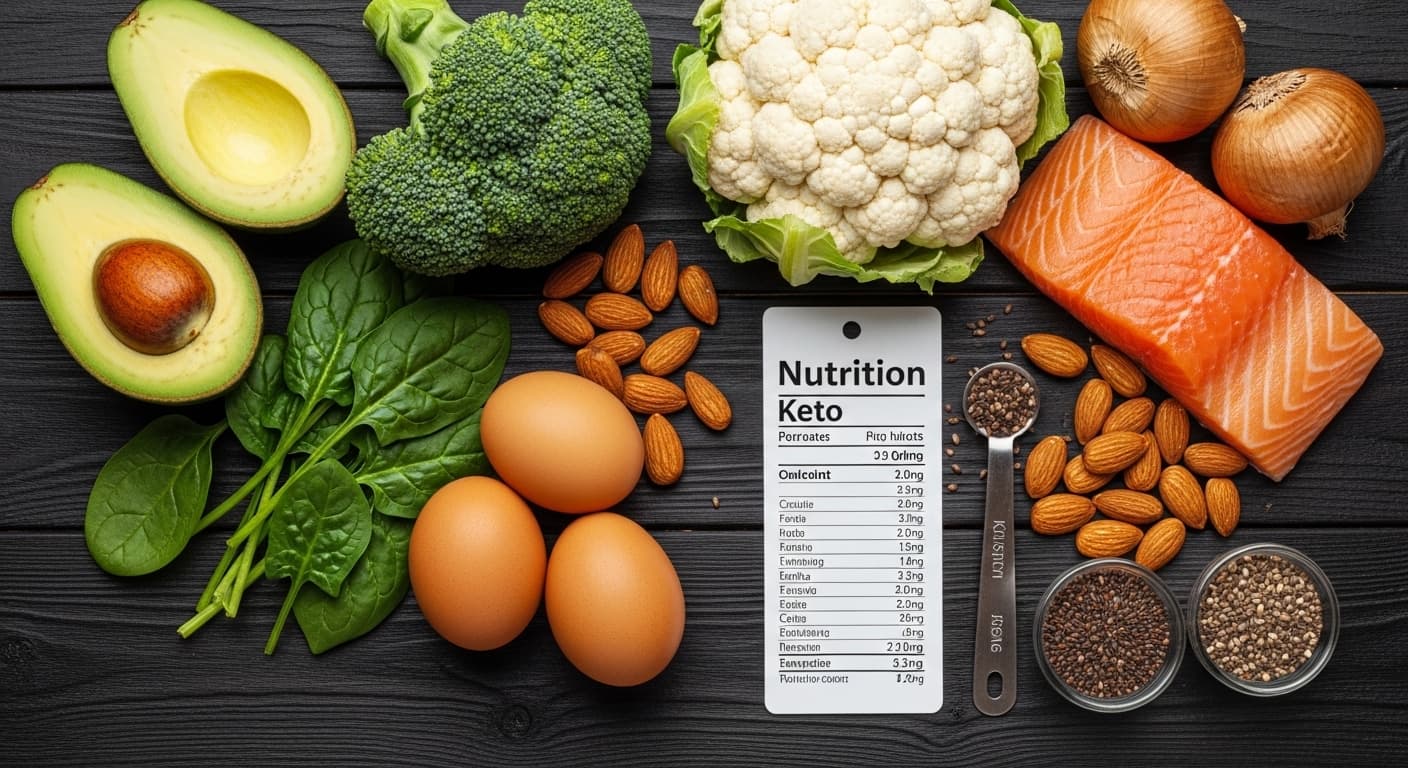
Most keto beginners who feel stuck are not failing because of willpower. They are failing because their net carb math is wrong.
We see the same pattern over and over. Someone cuts bread, pasta, and sugar, starts eating “keto” snacks, then waits for ketosis to kick in. Instead, cravings stay high, energy drops in the afternoon, and the scale barely moves.
The problem usually comes down to one thing: miscounted carbs.
Some people count too many carbs and avoid foods like broccoli or avocado for no reason. Others subtract every sugar alcohol listed on a package and unknowingly push themselves out of ketosis.
By the end of this post, you will know the exact net carb formula, the biggest label mistakes, and how to fix your carb tracking for good.
What Are Net Carbs?

Net carbs are the carbohydrates your body actually digests and uses for energy.
Keto focuses on net carbs because not every carbohydrate affects blood sugar the same way. Fiber passes through the digestive system without a meaningful glucose response. Some sugar alcohols also have little to no effect on insulin.That is why keto tracks net carbs instead of total carbs.
Here is the formula most people should follow:
| Total Carbs | Minus Fiber | Minus Qualifying Sugar Alcohols | Net Carbs |
| Found on every label | Always subtract | Erythritol only | Your actual keto number |
Many beginners stop at “total carbs” and treat every carb the same. That creates unnecessary restriction.
A cup of broccoli may show 7g total carbs, but after subtracting fiber, the usable carb count is much lower. The same applies to avocado, spinach, cauliflower, and chia seeds.
This distinction matters because ketosis depends on your actual glucose impact, not the total number printed on a package.
How to Calculate Net Carbs (Step by Step)
The net carb formula has two steps, and most people only get one of them right.
The Correct Formula
Net Carbs = Total Carbs – Fiber – Erythritol
That is the formula that Cast Iron Keto follow
Step 1: Find Total Carbs
Look at the Total Carbohydrate line on the nutrition label.
This number includes:
- Fiber
- Sugar
- Sugar alcohols
- Starches
It is the starting point only.
Step 2: Subtract Dietary Fiber
Fiber does not create a meaningful blood sugar rise in most people.
Subtract all dietary fiber from the total carbohydrate count.
Step 3: Subtract Erythritol Only
This is where many keto beginners get into trouble.
Only subtract erythritol fully. Most other sugar alcohols still affect blood sugar to some degree.
If the product contains maltitol, xylitol, sorbitol, or unspecified sugar alcohols, count them toward your net carbs.
Example: Broccoli
| Food | Total Carbs | Fiber | Sugar Alcohols | Net Carbs |
| Broccoli (100g) | 7g | 2.6g | None | 4.4g |
Broccoli fits easily into a keto diet. Many beginners avoid it because they only look at total carbs. That mistake leads to lower fiber intake, fewer micronutrients, and a diet that feels harder than it needs to be.
Why Beginners Overcalculate Net Carbs

Over-calculating net carbs is the more common mistake, and it makes keto harder than it has to be.
We regularly see beginners avoid vegetables because the label looks too high at first glance.
Broccoli shows 7g carbs. Avocado shows 9g carbs. Almonds show 6g carbs.
Without subtracting fiber, those foods appear “too carb heavy” for ketosis. They are not.
This creates a cycle where people cut out nutrient-dense foods and replace them with packaged keto snacks. Hunger increases, meals feel repetitive, and cravings stay high.
The result is usually one of two outcomes:
- The person quits keto because it feels restrictive
- The person overeats processed “keto” foods and stalls progress
Whole foods with fiber are rarely the problem.
The real issue usually comes from poor label math and processed products with misleading carb claims.
Fiber: When to Subtract It (And When It Gets Complicated)
Fiber is subtracted from net carbs because the body cannot digest it, so it does not raise blood sugar.
For whole foods, the rule is simple:
- Subtract soluble fiber
- Subtract insoluble fiber
Both types have little impact on blood glucose in normal serving sizes.
The confusion starts with processed keto products.
Many low-carb bars and packaged snacks use added fibers like:
- Chicory root fiber
- Inulin
- Tapioca fiber
Some people tolerate these well. Others see digestive issues or blood sugar increases after eating them.
That is why whole foods remain more predictable.
Reliable Whole-Food Net Carb Examples
| Whole Food | Total Carbs | Fiber | Net Carbs |
| Avocado (100g) | 9g | 7g | 2g |
| Broccoli (100g) | 7g | 2.6g | 4.4g |
| Almonds (28g) | 6g | 3.5g | 2.5g |
| Chia Seeds (28g) | 12g | 10g | 2g |
| Spinach (100g) | 3.6g | 2.2g | 1.4g |
Our practical rule is simple:
- Whole-food fiber: subtract it
- Added fiber in processed snacks: be cautious
That one habit prevents a lot of keto stalls.
Sugar Alcohols Ranked by Keto Safety
Sugar alcohols are where net carb math gets genuinely confusing, and where most labels mislead you.
Sugar alcohols are sweeteners used to reduce sugar content in low-carb products.
The problem is that many brands subtract all sugar alcohols from their net carb totals. That creates artificially low numbers on the front of the package.
Not all sugar alcohols behave the same way.
Sugar Alcohol Reference Table
| Sugar Alcohol | Glycemic Index | Keto Safe? | Subtract from Net Carbs? |
| Erythritol | 0 | Yes | Yes, subtract fully |
| Mannitol | 0 | Yes | Yes, subtract fully |
| Xylitol | 13 | Partial | No |
| Sorbitol | 9 | Partial | No |
| Isomalt | 9 | Partial | No |
| Maltitol | 36 | No | Count fully |
Maltitol is the biggest issue.
It raises blood sugar far more than most keto beginners realize. Yet many protein bars and low-carb candies subtract it completely to advertise tiny net carb counts.
If a label says “sugar alcohols” without naming which type, count all of them toward your carbs.
That conservative rule keeps the math honest.
The Serving Size Multiplier Trap

Serving size is the easiest way to accidentally double or triple your net carb count without realizing it.
Nutrition labels list carbs per serving, not per package.
Many people glance at the front label, see “4g net carbs,” and assume the entire product contains 4g.
Then they eat the whole thing.
A keto snack bar may list:
- 4g net carbs per serving
- 3 servings per package
If you eat the full package, that is 12g net carbs.
For someone targeting 20g net carbs daily, that single snack uses more than half the day’s carb budget.
This happens constantly with:
- Keto ice cream pints
- Protein bars
- Nut mixes
- Packaged desserts
Before eating any processed food, check:
- Serving size
- Servings per container
- Actual amount consumed
That habit alone fixes many keto plateaus.
The Keto Snack Trap and Label Marketing Loopholes
A product labeled low carb or keto-friendly is not automatically safe to eat without doing the math yourself.
The term “net carbs” is not tightly regulated.
Brands can manipulate the number by subtracting ingredients that still affect blood sugar.
The biggest example is maltitol.
A product may claim:
- 2g net carbs on the front
- 20g+ total carbs on the label
After checking the ingredients, you often find maltitol doing the heavy lifting.
The products most likely to use this tactic include:
- Protein bars
- Keto candy
- Low-carb ice cream
- Packaged cookies
- Keto bread
At Cast Iron Keto, we recalculate processed products manually.
We trust the nutrition label more than the marketing on the front of the package.
That extra 30 seconds prevents a lot of confusion later.
Real Food Label Walkthrough (3 Examples)
The fastest way to get comfortable with net carb math is to walk through real food labels, step by step.
Example 1: Avocado
| Total Carbs | Fiber | Sugar Alcohols | Correct Net Carbs |
| 9g | 7g | None | 2g |
This is simple whole-food math.
Example 2: Processed Keto Bar
| Total Carbs | Fiber | Erythritol | Maltitol | Label Says | Correct Net Carbs |
| 22g | 5g | 10g | 7g | 0g | 7g |
The package subtracts everything, including maltitol.
That is misleading.If someone eats two bars thinking they consumed 0g net carbs, they actually consumed 14g net carbs.
Example 3: Broccoli
| Total Carbs | Fiber | Sugar Alcohols | Correct Net Carbs |
| 7g per 100g | 2.6g | None | 4.4g |
Many keto beginners avoid broccoli because they only see the total carb number.
That mistake removes fiber, potassium, vitamin C, and meal volume from the diet for no reason.
How Net Carb Errors Affect Ketosis
When you miscalculate net carbs, you are not just getting the math wrong. You are signaling your body to stay out of fat-burning mode.
When digestible carbs enter the bloodstream, insulin rises.
Higher insulin slows ketone production.
That is why hidden carbs from processed snacks matter. A few small mistakes across the day can quietly push someone past their carb threshold.
This usually shows up as:
- Constant hunger
- Afternoon crashes
- Brain fog
- Slow fat loss
- Cravings that continue past week two
Many people think keto “does not work” for them.
In reality, the carb math was off from the beginning.
The Simple Habit That Prevents Net Carb Mistakes
The simplest way to avoid net carb mistakes is to stop relying on front-of-package marketing claims.
Most keto math errors happen because people trust:
- “0g net carbs” claims
- community-submitted app entries
- serving sizes they never verify
The fix is simple.
Check the nutrition label yourself every time.
For packaged foods:
- Start with total carbs
- Subtract fiber
- Only subtract erythritol
- Multiply by the actual serving size you ate
If the label lists vague ingredients like “sugar alcohol blend” without specifics, count those carbs fully.
Whole foods make this process much easier.
Foods like:
- eggs
- salmon
- avocado
- broccoli
- spinach
- cauliflower
- almonds
have predictable net carb counts and fewer label tricks.
That is one reason we build most meals around simple whole-food ingredients cooked in cast iron. The carb math stays consistent, and ketosis becomes easier to maintain.
Processed Keto Foods vs Whole Foods: Why the Math Is Different

The net carb formula works cleanly on whole foods. Processed keto products are where the formula gets abused.
Whole foods contain:
- Real fiber
- Fewer additives
- Straightforward nutrition data
Processed keto snacks often contain:
- Multiple sweeteners
- Added fibers
- Confusing labels
- Marketing-driven carb claims
That does not mean processed keto foods are forbidden.
It means they require more attention.
At Cast Iron Keto, most meals start with whole ingredients because the carb counts stay reliable.
Reliable Whole-Food Keto Staples
| Food | Net Carbs |
| Avocado | 2g per 100g |
| Eggs | 0.4g per egg |
| Spinach | 1.4g per 100g |
| Salmon | 0g |
| Broccoli | 4.4g per 100g |
| Almonds | 2.5g per 28g |
| Cauliflower | 3g per 100g |
These foods make keto simpler because there are fewer label tricks involved.
Quick Checklist: Is Your Net Carb Math Correct?
Before assuming keto is not working, run through this checklist to catch the most common calculation errors.
- Are you subtracting fiber from total carbs?
- Are you only subtracting erythritol, not every sugar alcohol?
- Did you multiply the carb count by the actual servings eaten?
- Are you checking app entries against the real nutrition label?
- Are you avoiding vegetables because of total carb numbers alone?
- Are you staying near 20g net carbs daily while starting keto?
The 20g Safety Rule
We recommend starting at 20g net carbs per day for the first four to six weeks.
Most people enter ketosis within two to five days at that level.
After fat adaptation, some people can maintain ketosis closer to 30g to 50g net carbs daily. That varies by:
- Activity level
- Muscle mass
- Insulin sensitivity
- Food choices
Starting at 20g keeps the process simple and removes guesswork.
Frequently Asked Questions
Source link