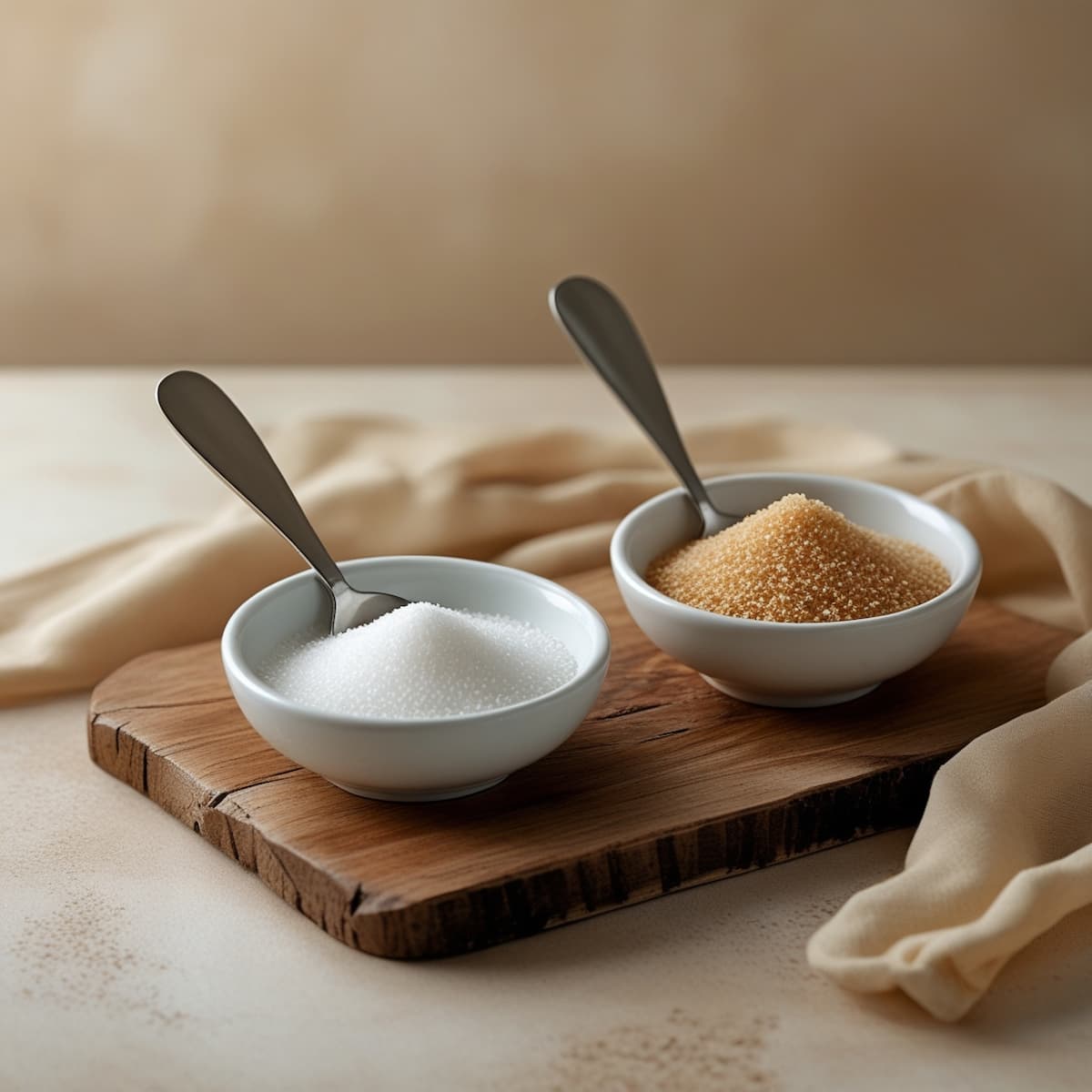
Allulose and monk fruit are two popular sugar substitutes used by those following keto, low-carb, or sugar-free diets. Both are low-calorie, natural options that can satisfy your sweet tooth without spiking blood sugar. This guide compares their sweetness, taste, uses in cooking, digestion, and overall value to help you decide which fits your lifestyle best.
Jump to:
What is Allulose?
Allulose is a rare sugar found in small amounts in foods like figs and raisins. It contains approximately 0.4 calories per gram, which is 90-95% fewer calories than regular sugar. Although it’s a monosaccharide like glucose or fructose, your body does not metabolize it, so it passes through without impacting blood sugar.
It behaves almost exactly like sugar in recipes; it turns brown, adds volume, and blends smoothly, making it excellent for baking, ice cream, or syrups.
What is Monk Fruit?
Monk fruit is derived from the Siratia grosvenorii plant native to Southeast Asia. Its sweetness comes from mogrosides, particularly mogroside V, which is up to 250 times sweeter than sugar. Monk fruit contains zero calories and zero net carbs.
It’s more often sold in liquor, powdered, or granulated form; sometimes blended with erythritol or allulose to tone down the intense sweetness. Pure monk fruit is extremely concentrated and used in minimal amounts.
Comparison Table: Allulose vs Monk Fruit
The table below shows the comparison of basic features of Allulose and Monk Fruit:
| Feature | Allulose | Monk Fruit |
| Source | Naturally, in figs, in raisins | Siratia grosvenorii fruit |
| Sweetness Level | Approx 70% as sweet as sugar | 150-250x sweeter than sugar |
| Calories per Gram | 0.4 | 0 |
| Carbohydrate Impact | 0 net carbs | 0 net carbs |
| Cooking Performance | Browns and caramelizes like sugar | Stable in heat, but doesn’t brown or add volume |
| Best Uses | Baking, Ice Cream, Sauces, Syrups | Intense sweetness, mild fruity aftertaste |
| Glycemic Index | Near zero | Zero |
| FDA GRAS Status | Yes | Yes ( since 2011 ) |
Taste & Texture
Allulose:
Monk Fruit:
Cooking & Baking Use Cases
| Use Cases | Allulose | Monk Fruit |
| Cookies & Cakes | Excellent texture, moisture, and browning | Needs bulking agent ( often combined with erythritol or allulose ) |
| Ice Cream | Adds softness and prevents crystallization | Less effective for creamy texture |
| Coffee and Tea | Dissolves well and tastes clean | Sweetens intensely with just a few drops |
| Sauces & Dressings | Balances acidity well | Great in vinaigrettes and sugar-free ketchup |
Digestive Tolerance
Allulose:
Most people tolerate allulose well in moderate quantities. It is absorbed in the small intestine but not metabolized, and is excreted unchanged in urine. At higher doses (~0.55 g per kg of body weight), some users may experience mild gas or bloating.
Monk Fruit:
Monk fruit extract has no known digestive side effects. It does not ferment in the gut and is widely considered easy to digest. It’s suitable for people with sensitive stomachs or looking to avoid sugar alcohols.
Final Thoughts: Which Sweetener Should You Choose?
Allulose and monk fruit are both excellent sugar substitutes, but they serve different roles depending on your needs. Allulose shines when you want a true sugar-like experience; perfect for baking, browning, and creating rich textures. Monk fruit, on the other hand, is ideal when you’re seeking intense sweetness with zero calories in beverages, sauces, or low-bulk recipes.
If you’re focused on texture and performance in the kitchen, allulose is likely your best bet. If you’re aiming for maximum sweetness with the smallest serving and clean ingredients, monk fruit delivers.
Many people find the best results come from using both, leveraging monk fruit’s potency with allulose’s structure. Try each one in a few recipes to see how they complement your style of cooking and dietary goals. There’s no single winner, only the sweetener that works best for you.
Frequently Asked Questions
Which is better for keto?
Both are excellent for keto. They have zero or near-zero net carbs, no blood sugar impact, and support low-carb cooking goals.
Is allulose or monk fruit better for baking?
Allulose is better for baking because it adds moisture, volume, and browning. Monk fruit requires a bulking agent and works better when blended.
Which sweetener tastes most like sugar?
Allulose tastes more like sugar due to its mild, clean flavor and slight cooling effect. Monk fruit is much sweeter but may have a mild fruity aftertaste.
Can you use monk fruit and allulose together?
Yes, blending monk fruit and allulose is common. Monk fruit provides strong sweetness while allulose adds texture and baking functionality.
Are allulose and monk fruit safe to eat daily?
Yes, both are considered safe by the FDA and are approved for daily use. Most people tolerate them well with no major side effects.
Source link