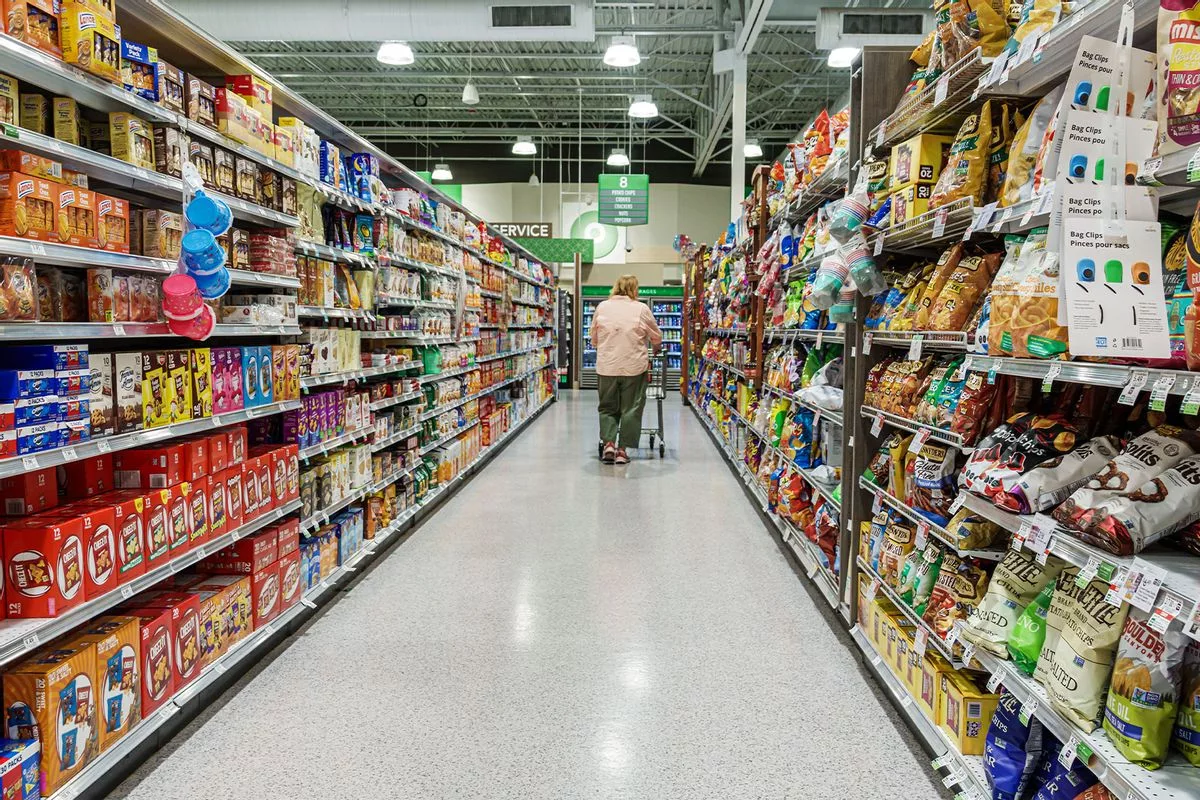
It’s no secret that many of our favorite foods contain an array of chemicals that can lead to serious health risks.
This month, Consumer Reports — the watchdog group that’s currently urging the Department of Agriculture to remove Lunchables from the National School Lunch Program — found that pesticide contamination was rampant in several produce items, both conventional and organic. Pesticides, the group said, “posed significant risks” in 20% of the foods they examined, including bell peppers, blueberries, green beans, potatoes, and strawberries. Green beans, in particular, contained residues of a pesticide that is prohibited from being used on the vegetable for over a decade. And imported produce, namely some from Mexico, was likely to carry especially high levels of pesticide residues.
In addition to pesticides, there’s been growing concerns about PFAS, short for per- and poly-fluoroalkyl substances. Dubbed “forever chemicals,” PFAS are a group of synthetic chemical compounds that have been used in industry and consumer products since the 1940s because of their ability to resist grease, oil, water, and heat. Although the chemicals are useful in food packaging and cookware, they are harmful to human health and our environment. PFAS take at least a century to break down in the human body, and even longer in the environment. Prolonged exposure and consumption of PFAS also contributes to a higher risk of cancer, autoimmune disease, thyroid problems and other health issues.
Unfortunately, PFAS are widespread in our foods — specifically some produce items, packaged foods and seafood — and even our drinking water. Today, more than 97% of the national population has PFAS in their bodies, according to the Centers for Disease Control and Prevention (CDC). To make matters worse, human exposure to PFAS has become increasingly difficult to assess with the creation of new substances in recent years. PFAS are almost impossible to avoid, many experts have said. Further research into the chemicals — both new and existing — is also ongoing.
In 2020, CR tested 47 bottled waters, including 35 noncarbonated and 12 carbonated ones, for four heavy metals (arsenic, cadmium, lead, and mercury) along with 30 PFAS chemicals. Most of the noncarbonated beverages had detectable levels of PFAS, but only two brands — Tourmaline Spring and Deer Park — exceeded the 1 part per trillion health guideline set by the Environmental Working Group (EWG). Both brands later refuted the findings: Tourmaline Spring said PFAS levels in its bottle water are below the levels set by the International Bottled Water Association, while Nestlé, which owns Deer Park, claimed a recent test on its brand of water revealed “undetectable levels” of PFAS.
Many of the carbonated beverages CR tested contained measurable amounts of PFAS. Perrier Natural Sparkling Mineral Water, La Croix Natural Sparkling Water, Canada Dry Lemon Lime Sparkling Seltzer Water, Poland Spring Zesty Lime Sparkling Water, Bubly Blackberry Sparkling Water, Polar Natural Seltzer Water, and Topo Chico Natural Mineral Water all had PFAS levels higher than 1 part per trillion.
Outside of bottled waters, PFAS have also plagued sports drinks. Prime Hydration, the contentious energy drink brand founded by internet personalities Logan Paul and KSI, was named in a 2023 class action lawsuit claiming the brand’s drinks contain PFAS. The suit, filed in the Northern District of California, alleged that the amount of PFAS found within Prime Hydration during independent testing was “three times the (EPA’s) recommended lifetime health advisory for drinking water.” It also accused the brand of fraudulently marketing its drinks as healthy.
A motion to dismiss hearing was heard on April 18. In it, Prime Hydration argued that the plaintiff failed to allege “cognizable injury” along with “facts showing a concrete (and) imminent threat of future harm.”
Paul responded to the lawsuit in a three-minute-long TikTok video posted Wednesday.
“First off, anyone can sue anyone at any time that does not make the lawsuit true,” he said. “And in this case, it is not… one person conducted a random study and has provided zero evidence to substantiate any of their claims.”
“This ain’t a rinky-dink operation. We use the top bottle manufacturers in the United States. All your favorite beverage brands… use these companies. If the product is served in plastic, they make a bottle for them.”
Paul claimed that Prime “follows Title 21 for the code of regulations for (polyethylene terephthalate) and all other types of bottles.” According to the U.S. Code, Title 21 “made it unlawful to manufacture adulterated or misbranded foods or drugs in Territories or District of Columbia and provided [a] penalty for violations.” Many national beverage companies use polyethylene terephthalate (PET) because it is a recyclable, “clear, durable and versatile” plastic, according to the American Beverage Association.
Want more great food writing and recipes? Subscribe to Salon Food’s newsletter, The Bite.
Measures to limit PFAS pollution are slowly being issued as of recently. On April 10, the Biden-Harris Administration announced the first-ever national, legally enforceable drinking water standard that would protect communities from exposure to PFAS. That being said, the new regulations don’t apply to all public drinking water systems in the US and will take several years to go into full effect.
In the meantime, consumers can limit their intake of PFAS by testing their tap water with a home test kit obtained from a certified lab or through a local environmental agency, like EWG’s tap water database. It’s important to note that boiling or sanitizing water won’t rid it of “forever chemicals.” But using certain faucet filters and even a countertop filter and water pitcher filter certainly will.
As for how to reduce exposure of PFAS in food and home products, the PFAS-REACH (Research, Education, and Action for Community Health) project, funded by the National Institute of Environmental Health Sciences, offered guidance on their official website. A few notable tips include looking for the ingredient polytetrafluoroethylene (PTFE) or other “fluoro” ingredients on product labels, avoiding nonstick cookware and boycotting takeout containers.